

One question that comes up at this point in time: Will AI replace human jobs, particularly in the digital marketing industry? Though the answer remains arguable, there is definitely no doubt that the introduction of AI into digital marketing has opened up new job opportunities worth exploration.
AI is not a trend that will fade any time soon, and it genuinely changes how digital marketing works. Knowledge of these roles—from starting out in your career to advancing up its ranks—will help you move about in this new landscape successfully. Let us consider different types of digital marketing jobs and get an idea of how AI is influencing each type of job.
Evolution of digital marketing roles due to generative AI

Generative AI is making a number of changes within the field of digital marketing. The more you understand these, the better you’ll want to make adjustments or put them into good use to achieve optimum results in marketing strategies. Let’s look through some real-world examples and see how AI reshapes this industry.
Enhancing Customer Experience with Generative AI
With generative AI revolutionizing customer interaction, businesses now go way more personalized and engaging. Get ahead by integrating AI tools that help maximize customer satisfaction and make their shopping journey smooth.
Example: Walmart’s AI-Powered Shopping Assistant

Walmart has integrated generative AI into the shopping experience with an AI shopping assistant, AI-driven search capabilities, and customers’ interior design features. All these tools make it much easier for shoppers to find products and get personalized recommendations, hence smoothening and making the act of shopping much more pleasurable. Consider how you can put in place similar AI features to improve your customers’ experience.
Creative Advertising and AI-Driven Storytelling
AI is also shifting the very nature of how brands tell their stories, creating more personalized and impactful ads. Harness the power of AI to produce focused content that will speak to your audience.
Example: Uber India’s 10th Anniversary Campaign
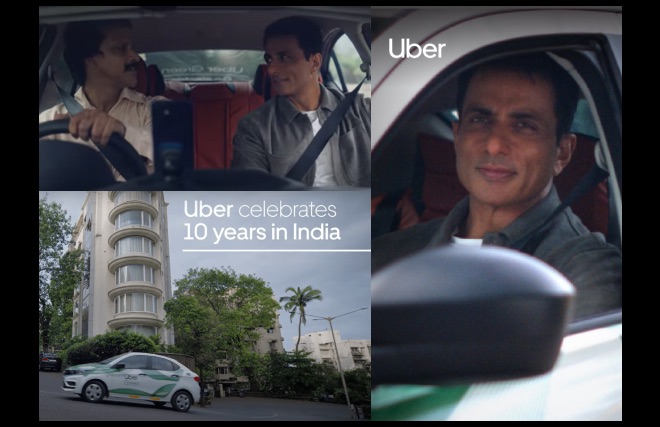
Uber India celebrated its 10th anniversary with a rather unique generative AI-harnessed campaign that churned out personification videos for drivers and riders alike, showcasing their journey with Uber—inclusive of kilometers traveled and 5-star ratings. These videos were messages of appreciation to the drivers and riders who contributed so much to how far along in the journey Uber has come, hence making the campaign memorable and effective. See how you can leverage AI in fashioning personalized stories for your audience.
AI Avatars and Social Content Creation
Generative AI is further breaking into the social scene in the role of content creation, entirely replacing roles formerly held by humans through AI avatars. Get ready with AI avatars to create engaging and cost-effective content for your brand.
Example: AI-Generated Livestream Influencers on Taobao

It’s a phenomenon sweeping Chinese e-commerce platforms such as Taobao: the rise of AI-generated livestream influencers. This involves AI clones that replicate human streamers, created by startups and tech giants, lowering the costs for brands. The technology’s got so good—only a minute of video is needed to create an AI avatar. Consider using AI avatars to step up your social media game and reach a larger audience.
Innovations in Product and Service Development
Not only is AI amplifying the marketing effort, but it’s also creating a path for innovation in product and service development. Putting AI to work in bringing new, differentiated products to market engages customers.
Example: G-Star Raw’s AI-Driven Denim Designs
G-Star Raw used AI to generate 12 different designs of denim, thus changing the pathway of denim fashion by putting technology together with design. One piece, the AI Denim Cape, really speaks for features about using AI in fashion and is displayed in store in Amsterdam. The collection launched simultaneously on g-star.com. Now, think of how AI can help you innovate and differentiate your product within the market.
Types of Digital Marketing Jobs
Digital Marketing, at its core, comes with these postulated roles across diverse levels—from entry-level to senior professionals. Knowing these roles will help one find the appropriate job or plan the career path accordingly. We shall further divide types of digital marketing jobs under three categories: entry level, mid-level, and senior-level jobs.
Entry-Level Positions
These are entry-level roles for those just entering the digital marketing field; in most cases, they require basic knowledge of digital marketing concepts and offer opportunities to learn and grow within the field.
1. Social Media Coordinator
- Average annual salary: 3L/year
A Social Media Coordinator is someone who oversees the company’s social media accounts, leads in developing and scheduling posts, and engages followers. This was a call to exercise creativity in communication, including fluency with at least basic knowledge of trends within social media.
2. Content Writer
- Average annual salary: 3.7L/year
Content Writers will deliver blog posts, articles, social media content, and website copy. This requires not only a good command of writing but also the skills to be detail-oriented and to conduct research in writing engaging content that speaks to the brand’s voice.
3. SEO Specialist
- Average annual salary: 4.8L/year
An SEO specialist ensures that website content is organized in such a way as to provide high and relevant search engine ranking. The specialist does keyword research, analyzes website performance, and executes strategies for improving organic traffic to the site. Some basic skills in using SEO tools and techniques are quite necessary.
Mid-Level Positions
Mid-level roles require more years of experience and specialized expertise. Professionals who get placed in these positions normally have a few years of experience and are given tasks and projects of relatively higher complexity.
4. Digital Marketing Specialist
- Average annual salary: 6.8L/year
A Digital Marketing Specialist designs and executes marketing campaigns across different digital channels, such as e-mails, social media, and search engines. They analyze campaign metrics and execute data-driven decisions to maximize output. This position requires knowledge of digital marketing concepts and tools.
One of the missing factor in most digital marketing certification program is practical learning. So, if you want to learn digital marketing from scratch, try to complete small-medium projects that you can showcase as case studies in your resume.
Training institutes like IIDE, GrowthAcad offers practical digital marketing classes in Pune with case studies and practical projects to learn from.
5. PPC Analyst
- Average annual salary: 7L/year
The PPC analyst is in charge of paid ad campaigns on Google Ads, social media platforms, and other similar platforms. The individual should develop verbal correspondence within advertisements, select audiences that are to be targeted, and analyze campaign performance toward the maximization of ROI. For this position, PPC tools and data analytical skills are very important.
6. Email Marketing Manager
- Average annual salary: 9.4L/year
The Email Marketing Manager designs and implements email marketing campaigns for lead nurturing and customer engagement. They develop content, segment email lists, and analyze campaign metrics in pursuit of better performance. Knowledge of email marketing platforms and strategies is required in performing this job.
Senior-Level Positions
Senior-level positions are roles that have strategic planning and leadership roles assigned to them. This includes professionals with vast experience, generally heading a whole department or an influential project in an organization.
7. SEO Manager
- Average annual salary: 8.9L/year
An SEO manager designs an SEO strategy for the company and ensures that every piece of content is search engine friendly. This encompasses managing the team of SEO specialists, running audits, designing strategies for better search rankings, increasing organic traffic, and commanding thorough experience with SEO tools and techniques.
8. Content Marketing Manager
- Average annual salary: 7.6L/year
The Content Marketing Manager acts as leadership over the creation and distribution of various formats of content that drive traffic and create engagement. This involves relevant content strategy formulation, outlining and managing content calendars, and coordination with writers and designers.
9. Digital Marketing Manager
- Average annual salary: 11.6L/year
A Digital Marketing Manager leads a team of marketers and oversees all digital marketing efforts: developing marketing strategies, budgeting, running metrics to ensure such campaigns are successful. For one to fit this role, he or she must possess leadership skills and have all-around knowledge in digital marketing.
10. Chief Marketing Officer (CMO)
- Average annual salary: 49.8L/year
The CMO is the top marketing executive inside a firm who designs the overall marketing strategy, including digital, branding, and customer engagement. CMO will directly work with the rest of the executives in planning marketing goals set against business objectives. This takes wide knowledge around marketing bases, great leadership skills, and documented success within the profession.
Emerging Roles Due to AI
With the spreading of AI across technologies, new roles are cropping up in the digital marketing landscape. These positions make use of AI in improving marketing strategy and delivering more personalized experiences fueled by data. Some of the main upcoming careers or roles within digital marketing due to AI are:
AI Marketing Specialist
An AI marketing specialist is a professional in the integration of artificial intelligence technologies into marketing strategies. Such a specialist implements tools of artificial intelligence to analyze data, automate campaigns, and optimize marketing efforts.
Role Applications:
- Use machine learning algorithms in predicting customer behavior.
- Use AI-driven insights to create personalized e-mail campaigns.
- Implement AI tools in an automated manner to do the marketing.
Data Analyst
Data analysts collect, process, and analyze large data sets to provide insights that the marketing decisions will be founded on. They use AI tools for handling big data more efficiently and discovering patterns that may define strategy.
Role Applications:
- Leverage the power of AI-driven analytics platforms for interaction analysis with customers.
- Identify trends and patterns of customer behavior.
- Tailor marketing strategies with data-driven insights.
Chatbot Developer
Chatbot Developers develop AI-driven chatbots that will help customer service, answer queries, and guide a user through any online process. This enhances customer engagement and operational efficiency.
Role Applications:
- Design chatbots that would be known to manage customer queries and product recommendations.
- Use AI to facilitate transactions and enhance customer service.
- Implement AI chatbots to enhance the total customer experience.
AI Content Creator
An AI Content Creator uses artificial intelligence tools to create content: blogging, social media updates, and marketing copy. The role entails using AI either in smoothing out content creation processes or even creating quality content at scale.
Role Applications:
- Use NLG tools to create content.
- Produce individual content for various marketing channels.
- Generate customized product descriptions and marketing copies with AI.
Programmatic Advertising Specialist
A programmatic advertising specialist oversees the procedures for automatic ad buying through AI and machine learning algorithms. They are responsible for the optimization of ad placements and targeting with the view of eliciting the best effectiveness out of campaigns.
Role Applications:
- Run dynamic ad bids with real-time data analysis.
- Show ads to the most relevant audience, at the optimal time.
- Bring more performance and ROI-driven strategies into ads through AI.
Predictive Analytics Expert
An expert in predictive analytics applies AI techniques to past data to predict future trends and behaviors. This becomes very important in proactive marketing strategies.
Role Applications:
- Utilize AI in a bid to help predict customer churning and suggest possible retention strategies.
- Design and execute focused efforts for targeted marketing to retain at-risk customers.
- Use predictive analytics to help predict long-term market trend and consumer behavior.
FAQs
Q1: What are the most in-demand digital marketing jobs today?
The most in-demand digital marketing jobs today are SEO specialists, content marketing managers, social media managers, digital marketing specialists, PPC analysts, data analysts, email marketing managers, UX designers, AI marketing specialists, and chatbot developers.
Q2: How can I start a career in digital marketing?
If you’re looking to kick-start a career in digital marketing, apply the steps below and attain experience and relevant skills.
- Learn Basics: Digital marketing courses can be availed as an online course or certification from Coursera, Google, or HubSpot.
- Build a portfolio: Make a blog or website for yourself to exercise vividly on and represent your skill.
- Get Experience: Apply for internship or junior positions to get hands-on experience.
- Network: Join some online digital marketing groups on LinkedIn. Attend some industry events and network with people.
- Specialize: Focus on any area of interest in digital marketing, ranging from SEO to content marketing, social media, and PPC.
Q3: Will AI replace digital marketing jobs?
Although AI is taking over repetitive tasks and giving data-driven insights in digital marketing, it can’t replace digital marketing jobs totally. While it will do analysis, automate campaigns, and personalization of customer experience, human creativity and strategic thinking are needed to survive in this space. Marketers deal with compelling storytelling, nuances of customer behavior, and coming up with innovative strategies—areas that AI just cannot replicate.
Balance between automation and human input is required. It is AI that enhances productivity and accuracy for concentrating on creation and strategic ad aspects. Therefore, it doesn’t replace jobs but reshapes the industry with new opportunities for those who can harness its capabilities while leveraging their unique human skills.
Q4: What skills are essential for succeeding in digital marketing?
You’ll need to possess the following skills if you wish to turn into a successful digital marketer:
- Creativity: The byproduct is the ability to think out of the box, coming up with many marketing ideas and campaigns.
- Communication: Excellent writing and verbal communication skills with the ability to pass clear and effective messages.
- Collaboration: The ability to teamwork with colleagues, clients, and other stakeholders.
- Analytical Thinking: It means reinterpreting data and then making an informed decision accordingly.
Q5: How can I leverage AI to enhance my digital marketing career?
Here are some tips to help in leveraging AI for a better career in digital marketing.
- Maximize AI-driven analytics tools, namely Google Analytics, SEMrush, or HubSpot, for an in-depth understanding of customer behaviors, campaign performance, and market trends.
- Use AI tools like Hootsuite or Buffer to automate social media scheduling, email marketing automation, report generation, and more.
- Tools such as Dynamic Yield and Persado will be very useful in the personalization of relevant content, recommendations, and ads based on customers’ individual preferences and behaviors.
- Brainstorm ideas, create copies, and even SEO-optimize content with the use of tools such as Copy.ai or Jasper to make sure that all your content is ready to snap into resonance with your audience.